Installing a PPF (Paint Protection Film) on your vehicle is a great way to protect its paintwork from scratches, rock chips, and other environmental damages. Below is a comprehensive guide to help you with the installation process. Please note that the process may vary depending on the specific PPF brand you use, so always follow the manufacturer's instructions provided with the product. Also, keep in mind that PPF installation can be challenging and may require professional help if you're not confident in your abilities.
Materials Needed:
- Paint Protection Film (pre-cut or bulk roll)
- Isopropyl alcohol or PPF-approved cleaning solution
- Spray bottle
- Microfiber towels
- Soft rubber Squeegee or application tool
- Heat gun or blow dryer
- Utility knife or razor blade
- Heat source for curing (e.g., infrared lamp or heat gun)
Step-by-Step Installation:
- Prepare the Vehicle:
- Park your vehicle in a clean and enclosed space such as a garage or a covered area. This will protect the car from exposure to airborne dust, dirt, and debris that could potentially get trapped under the PPF during installation.
- Make sure the car's surface is clean and free from dust, dirt, and debris. Wash the car thoroughly with car soap and water, and then dry it using a microfiber towel.
- Use isopropyl alcohol or a PPF-approved cleaning solution to remove any remaining contaminants or wax from the paintwork. This step is crucial to ensure proper adhesion of the PPF.
- Pre-cut the Film (if applicable):
- If you have a pre-cut PPF kit designed for your specific vehicle model, lay out the individual pieces and identify their positions on the car's surface. This step helps you get an overview of the installation process.
- Spray the Surface:
- Fill a spray bottle with a mixture of water and add 1-1.5 milliliters of baby shampoo or a PPF-approved slip solution (shake well).
- Spray the surface with the solution to make it easier to reposition the film during the installation.
- Apply the PPF:
- Start with a relatively flat and easily accessible section of the vehicle, like the hood or the fenders.
- Peel off a portion of the backing from the PPF film.
- Position the exposed portion of the film on the car's surface, using the slip solution to slide it into place.
- Make sure the film is correctly aligned with the edges of the area you're covering.
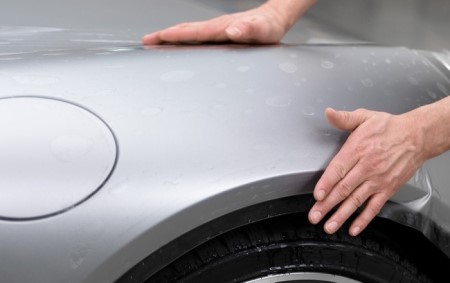
- Gradually peel off the rest of the backing while using the squeegee to smooth out the film and remove any air bubbles or wrinkles.
- Work Carefully and Slowly:
- Take your time during the installation process, especially around curves, edges, and complex areas (repeatedly spray more slip solution onto the adhesive side of the PPF to avoid drying or sticking unwantedly before correctly positioning the film on the vehicle).
- If necessary, use the heat gun or blow dryer to soften the PPF film slightly, making it more flexible and allowing it to conform better to the car's contours.
- Trim the Excess Film:
- Once the film is in place and properly adhered, use a utility knife or razor blade to trim away any excess material along the edges of the car's body panels. Be careful not to cut the paintwork (not required for pre-cut kit).
- Heating and Curing:
- After applying the PPF, use a blow dryer or infrared lamp to apply heat evenly across the film's surface. This process helps the film bond better to the car's paint and self-heal minor scratches.
- Repeat the Process:
- Continue applying the PPF section by section until you've covered all the desired areas of the vehicle.
- Final Check:
- Inspect the installed PPF to ensure that the edges are properly adhered onto the vehicle paint. It should be bubble-free. If you do see some minor water bubbles, please don't panic; they should go away within a few days.
- Post-Installation Care:
- Avoid washing the car or exposing it to rain for at least 48 hours after installation to allow the PPF to fully adhere.
- Regularly clean the PPF with a mild car soap and water. Avoid using abrasive cleaners or harsh chemicals.
Remember, installing PPF can be challenging, so if you're uncertain about the process, it's best to seek professional installation services to ensure proper application and the best protection for your vehicle's paintwork.